
The symptoms of Post-Traumatic Stress Disorder (PTSD) can leave one feeling worried, fearful, anxious, and panicked. It is easy to turn to coping mechanisms that may be harmful to physical and mental health, such as alcohol or drugs, in an effort to numb the effects, rather than to healthy PTSD therapy. However, several coping mechanisms for PTSD therapy in San Diego are beneficial and can become a part of your daily routine.
Methods for Coping with PTSD
Coping mechanisms for PTSD therapy can be positive and help you alleviate symptoms. Not every coping mechanism should be a vice, like substance abuse or risky behaviors. You can learn new strategies and adopt healthier habits that will decrease the risk of anxiety and calm panic attacks.
Grounding Techniques
PTSD therapy focuses on grounding oneself in the present instead of focusing on a traumatic memory. Traumatic memories are powerful and often engage the senses, making them feel as if they are occurring now. The following grounding techniques help to calm you while engaging the senses.
5-4-3-2-1 Method During an anxious episode or the beginning of a panic attack, take in your environment. Name five things you see, four things you can touch, three things you hear, two things you smell, and one thing you taste. Take your time to engage the senses and describe each one.
 Progressive Muscle Relaxation Technique Lie on the floor or a bed on your back. Starting with your toes, tense the muscles for a few seconds and then relax. Move to the feet, then the calves. Continue “scanning” the body, tensing and releasing muscle groups until you reach the face. If any part of the body still feels tense, go back and focus on that area.
Deep Breathing Deep breathing activates the parasympathetic nervous system, which lowers blood pressure and heart rate. Practice by inhaling a deep breath through the nose for the count of four, filling the lungs, and holding the breath for the count of four. Next, release the breath, exhaling through the mouth for the count of four. Repeat until you feel calmer.
Grounding techniques take practice. Try these techniques before bed to see which ones are easier for you.
Lifestyle Habits
Our lifestyles can help or harm us. By adopting a few lifestyle changes, we can dramatically change how the body responds to stress and trauma over time. Combined with PTSD therapy, lifestyle changes can help to lower anxiety levels.
Exercise Aim for at least 150 minutes of moderate-intensity exercise weekly to fight stress and anxiety.
Healthy Routines Ditch the ultra-processed foods for nutritious meals and prioritize sleep.
Hobbies Distract yourself with enjoyable hobbies and events to look forward to weekly or monthly.
Journaling Keep a record of your thoughts, feelings, and behaviors. You can share your entries with your counselor if you feel comfortable giving them a better idea of your thought processes.
Make these lifestyle choices part of your daily routine to maximize the benefits.
PTSD Therapy in San Diego, California
PTSD therapy in San Diego is available at San Diego Christian Counseling. All sessions are confidential and led by a professional mental health practitioner in San Diego.
Your Christian counselor in San Diego will combine faith-based principles with PTSD therapy to address every area of your life: physical, mental, emotional, and spiritual. Let us help you get started with PTSD therapy. Browse our online directory or call our reception team at San Diego Christian Counseling to learn more.
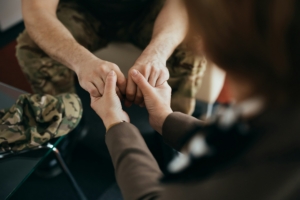
“Comfort”, Courtesy of Getty Images, Unsplash.com, Unsplash+ License

