
As you scroll through social media, you feel a familiar knot in your stomach as you see another perfectly filtered photo and possibly a toned body or another reminder that you don’t measure up. The pursuit of positive body image can feel like you’re chasing shadows in a culture that profits from this insecurity. You’re left in an impossible situation where loving yourself means you battle every message telling you you’re not enough.
This isn’t vanity or self-consciousness. This is a cultural message that women receive and internalize about worth, beauty, and identity. You find yourself caught between confidence and constantly comparing, accepting yourself and desperately wanting to change, embracing uniqueness, yet trying to fit impossible standards. Each contradiction creates a feeling of falling apart mentally, even though the outside appears perfect.
I praise you because I am fearfully and wonderfully made; your works are wonderful, I know that full well. – Psalm 139:14, NIV
The Mental Toll of Constant Comparison
 Living in a comparison-driven culture weighs down your mental health. Women who engage in appearance comparisons will often experience a higher rate of anxiety and depression. They will tend to struggle with body dissatisfaction more frequently. As you wake up each morning, you find yourself facing an internal struggle between self-acceptance and the pressure to conform to cultural standards.
This comparison trap doesn’t just affect how you perceive your reflection; it influences your entire self-perception. There are times you will find yourself avoiding social situations, declining invitations, or hiding behind baggy clothes, simply because you’re exhausted at the thought of competing.
When you’re in this constant state of self-evaluation, you will experience what is known as appearance-based anxiety. This is the thought process of your worth being tied to how you compare yourself to others.
This culture, consumed by social media, only amplifies this struggle. Every scroll produces perfectly curated photos and reels that your mind believes to be reality. Higher levels of body dissatisfaction and symptoms of depression are reported more by women who tend to spend more time on image-focused platforms.
You’re not imagining the mental fog that follows a social media session. Your mind is processing thousands of settled comparison messages that will damage your self-worth.
But the Lord said to Samuel, “Do not consider his appearance or his height, for I have rejected him. The Lord does not look at the things people look at. People look at the outward appearance, but the Lord looks at the heart.” – 1 Samuel 16:7, NIV
When Your Worth Becomes Tied to Appearance
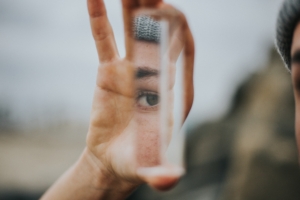 When your mood depends on the number on the scale or how your jeans fit, you know something has shifted in your thought processes. It’s not about health or self-care. This comes because your identity is becoming hostage to your appearance. Women who tie self-worth to physical appearance may find themselves struggling with eating disorders, anxiety, and difficulties in relationships.
This is a vicious cycle that happens quickly. Criticizing your body leads to shame, and this can drive you to manifest obsessive behaviors around food, exercise, or altering your appearance. Christian counselors often encounter women who have lost touch with their true identity. They no longer know who they are beneath the surface, and they spend high amounts of energy trying to manage an external image while suffering neglect internally.
In every relationship, you have an appearance-focused identity that may surface. Withdrawing from your spouse during intimate moments, avoiding certain activities with friends, and even a disconnect from your children can become problematic. Being preoccupied with how you look ends up affecting more than what you see in a mirror. It is likely you will also experience exhaustion that is emotional and spiritual, just as much as it is physical.
For we are God’s handiwork, created in Christ Jesus to do good works, which God prepared in advance for us to do. – Ephesians 2:10, NIV
Cultural Messages vs. God’s Truth About Positive Body Image
Being bombarded with contradictory messages about an acceptable positive body image can become overwhelming. Culture says you must love yourself, and yet it sells your products to change everything about who you are. You find yourself being encouraged to embrace natural beauty, yet you’re shown images of surgically enhanced, perfected bodies as a standard.
 The result of these mixed messages is cognitive dissonance that affects your mental health. When you struggle to reconcile cultural beauty standards with your personal values, you can experience higher levels of anxiety and identity confusion. This leaves you caught between wanting to fit in with cultural expectations and standing firm in your faith-based understanding of who you are.
The media profit from your dissatisfaction by creating problems so they can sell a solution. They tried to tell you that confidence comes from the right makeup, the perfect workout, or the most popular fashion trend.
At the same time, your spirit knows that true worth comes from being God’s daughter who was created with intention and purpose. This battle between spiritual truth and worldly validation creates an internal conflict that manifests through mental health struggles.
Christian counselors can identify women who feel guilty for caring about their looks while feeling inadequate about how they look. This is a natural result of living in a culture that sends conflicting messages about beauty and identity.
Your beauty should not come from outward adornment, such as elaborate hairstyles and the wearing of gold jewelry or fine clothes. Rather, it should be that of your inner self, the unfading beauty of a gentle and quiet spirit, which is of great worth in God’s sight. – 1 Peter 3:3-4, NIV
Building Positive Body Image Through Spiritual Practice
For unity, develop a healthy body image; you will need to be intentional about spiritual practices that counter the cultural standards. You will need more than positive body affirmations. You will need to know the truth that transforms how you see yourself. Mindfulness practices, combined with spiritual reflection, will help improve your body satisfaction and reduce appearance-related anxiety that you may experience.
The first step is to change your internal dialogue. You will need to understand how to catch yourself comparing or criticizing. Then you will need to be intentional about pausing and asking what God sees when he looks at you. This will help you replace the harsh voice in your head with the loving voice of God. This isn’t about ignoring areas that you want to cultivate, but you will approach your body with the same love and respect that God has for His creation.
 Prayer can be a powerful tool to help you shift your perspective. Rather than asking God how to change your body, you begin to ask Him to help you see yourself through His eyes. Spending time in worship and letting the truth of your identity in Christ will overshadow the temporary concerns about body image. It also helps to be in community with other faithful women to gain accountability and support as you navigate this journey.
Christian counselors highly recommend renewing your thought process through Scripture. Memorizing verses that speak to your identity in Christ will counter comparison thoughts when they arise. When you practice this type of thinking, it will rewire your brain to see God’s perspective rather than cultural measurements.
Do not conform to the pattern of this world, but be transformed by the renewing of your mind. Then you will be able to test and approve what God’s will is – his good, pleasing, and perfect will. – Romans 12:2, NIV
Seeking Support
Your personal journey toward positive body image isn’t based on achieving physical perfection. This journey is about aligning your self-perception with the truth of God’s word about your identity. Because of this, the comparison trap will lose its power, and your worth is anchored in an unchanging, spiritual reality.
The fluctuating cultural standards no longer have control over your thought process. This transformation won’t happen overnight, but with each intentional act toward changing your thought process, you will find new opportunities to choose God’s voice over society’s criticism.
Seeking support is not a sign of weakness. It is a matter of making a wise choice to overcome unhealthy self-perception. The freedom music is not found in perfect appearance; it’s only found in the perfect acknowledgment of how God sees you.
You don’t have to struggle through this alone. Contact our office today to learn how you can meet with me or one of the other Christian counselors in our directory.
References:
https://www.psychologytoday.com/us/basics/body-image
https://www.verywellmind.com/body-image-and-mental-health-5216203
https://psychcentral.com/health/body-image-issues
https://www.webmd.com/mental-health/eating-disorders/features/body-image-problems
https://www.headspace.com/mindfulness/body-image
Photos:
“Woman in the Mirror”, Courtesy of Ludovica Dri, Unsplash.com, CC0 License; “Reflection”, Courtesy of Vince Fleming, Unsplash.com, CC0 License; “Reflected”, Courtesy of alexey turenkov, Unsplash.com, CC0 License; “Selfie”, Courtesy of Paulina Herpel, Unsplash.com, Unsplash+ License

