
When you think about anxiety, you might not think about it with anger. However, anxiety and anger are common in specific types of anxiety disorders. Anxiety and anger are dualistic when a child’s irritability gives rise to anger, which is a mask for his anxiety.
Surprisingly, fatigue is one of the physical symptoms of anxiety, and it can impact a child’s ability to handle adverse responses from the environment around him. This can give him what appears to be a short fuse. In reality, the deeper issue could be related to an anxiety disorder that has yet to be diagnosed.
Another consideration when looking for correlations between anxiety and anger is that depression – which is often linked to anxiety – can be displayed as eruptive, explosive anger.
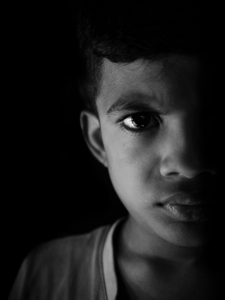 For example, your six-year-old struggles to process a hardship, such as an older sibling going away to college. While it might seem perfectly normal to you because college-aged children often leave for college, a young child may not understand that the college student will come back.
If the child has an anxiety disorder or is depressed, showing consistent signs for months, he may not have the language he needs to express that anxiety or depression. That’s when anxiety and anger can become like a double-edged sword.
The child doesn’t have the language to express his fears that the college-aged sibling won’t return or that he misses his older sibling and doesn’t know how to cope without the sibling’s presence. Therefore, the reactive response to anxiety that used to be comforted by the older sibling’s presence makes sense. In this case, a simple question about getting a backpack ready for school, for example, could unearth a response much more explosive than you’d expect.
Learning a child’s or a teen’s responses under normal circumstances is a great way to recognize when anxiety and anger fall into a watch-and-wait category.
What is watch and wait?
While you might have heard about watch-and-wait when it comes to a chronic illness or a cancer diagnosis, it can also help someone understand the symptoms of anxiety and anger – and how these two intersect at times.
The watch-and-wait philosophy can also be used during the diagnostic phase of anxiety and anger, helping a clinician to see if a patient’s anger is related to anxiety or if the anger is related to something else. It’s a period of observation where a parent, psychologist, and other adults on a treatment or care team pay attention to the symptoms that a child or teen exhibits.
If your child’s symptoms do not initially meet criteria for a formal diagnosis of anxiety disorder, a clinician may ask that you bring your child in for regular check-ins so that he or she can be monitored over time. This helps the licensed counselor better understand what daily life is like for the child and how they are or are not coping.
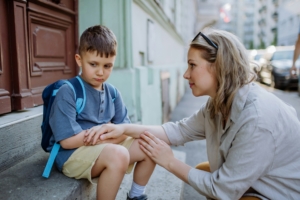 During this season, your observations are also helpful for a child’s diagnosis since the clinician only knows what the child can share. Again, young children may not have the language to express what they’re feeling. But, for example, if you notice a rise in outbursts, emotional triggers, expression of anger in specific situations, and heightened fear, you can share these with your child’s counselor.
Combined with your observations, the clinician may recognize new symptoms, see evidence of sustained symptoms over time, or ask questions that help your child process how he is feeling in ways that help to narrow the diagnosis. Essentially, a watch-and-wait approach helps a child’s counselor to use a battery of evidence to support a diagnosis, which can lead to more effective treatment options.
Treating Anxiety and Anger
The first course of action when helping your child with their anxiety and anger is to recognize that behavior is a form of communication. If your child explodes when you ask them to get ready for school, it might be that he or she feels nervous about being separated from you, which happens when you drop him or her off at school.
Most young children, however, will not know what’s truly going on. They’ll simply erupt in anger, throwing a tantrum. Similarly, developmentally delayed older children can have trouble expressing their emotions in rational terms. This is where a parent’s responses are crucial.
Second, make sure your response is calm. This can be tricky to do in the moment; however, if you remember that your child’s anxiety and anger are related to a communication issue – not a manipulation one – it’s generally easier to keep cool.
Recognize that your child isn’t getting something he wants or needs, and he’s upset about it. It might be that he needs you to break down the task into small steps. Instead of asking him to “get ready to leave for school,” you might start with small routines. “Danny, can you please go find the match to this red shoe?”
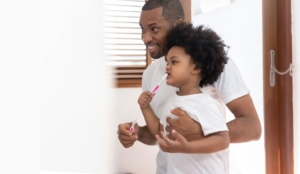 Giving your child an errand does two things: it allows him to move, which can be an antecedent to anxiety and anger, and it breaks the task into something practical and small. Whereas getting ready feels broad and big, finding one shoe is a smaller task.
Another way to respond calmly to your child is to recognize that anger is actually a mask for some hidden emotion, such as fear or worry. If you and your child’s clinician have determined that the anxiety and anger are related, which is common, it’s okay to pause, ask yourself what is under the anger, and help your child connect to the anger.
Talking to the anger may help. For example, ask your child to draw a picture or show you with stomping feet what the anger is like. Children who like art may be more responsive to the artistic expression, and children who need to move may appreciate the opportunity to act out the character of anger. This way, you can address the anger by name, treating it like you would a character in a television show.
Your child can do this, too. You can ask, “How can we tell anger that he is okay to be here, but he’s not okay to punch, kick, or scream? Can you help me talk to the anger and remind it that feelings are okay, but hitting is not?” Helping your child see the anger from a far-off perspective achieves more than just a shared language between you two. It also allows him to know that he is not synonymous with the feelings he has.
Finally, check in with a counselor without your child present to share your concerns if the anxiety and anger aren’t getting better. A children’s counselor can suggest other means of treatment, recognize underlying conditions that may be contributing to anxiety and anger, and help you find group therapy sites that help your child put the new skills he’s learning into practice.
Even if your child isn’t experiencing anxiety and anger together, looking for the underlying roots of anger or anxiety is one way to give your child language to share their feelings regularly.
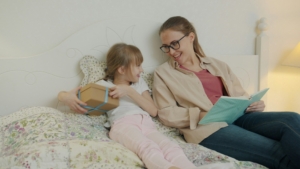 For example, maybe your eight-year-old is nervous about the first day of soccer because he isn’t sure he will be able to play as well as the other players. Recognizing and relating to his emotions is an essential step in helping him calm down and respond appropriately to his feelings.
You might practice talking to him as you by saying, “Buddy, I understand it’s kind of scary to try something new. I remember when I started a new class at school, and it made me nervous, too.”
Simple recognition of how he feels can help him be present with his emotions and accept that emotions are common. Another way to help your child recognize how he feels is to ask if he’s ever felt other emotions. Try to think of something he used to be afraid of doing or unsure about that he now does with ease.
You can compare the current nerves to that skill and remind him that everyone gets nervous, and he’ll probably tackle this just like he did the other skill: learning as he goes, practicing, and getting better along the way.
If you or your child wants more support in handling their anxiety and anger, reach out to one of our offices, where we can help you find a children’s counselor or therapy group to meet your child’s needs.
“Staring Boy”, Courtesy of Ayrus Hill, Unsplash.com, CC0 License; “Mother and Son”, Courtesy of Getty Images, Unsplash.com, Unsplash+ License; “Father and Son”, Courtesy of Getty Images, Unsplash.com, Unsplash+ License; “Mother and Daughter”, Courtesy of Vitaly Gariev, Unsplash.com, CC0 License

